Author Archives: Amy Antonucci

Why Garden?

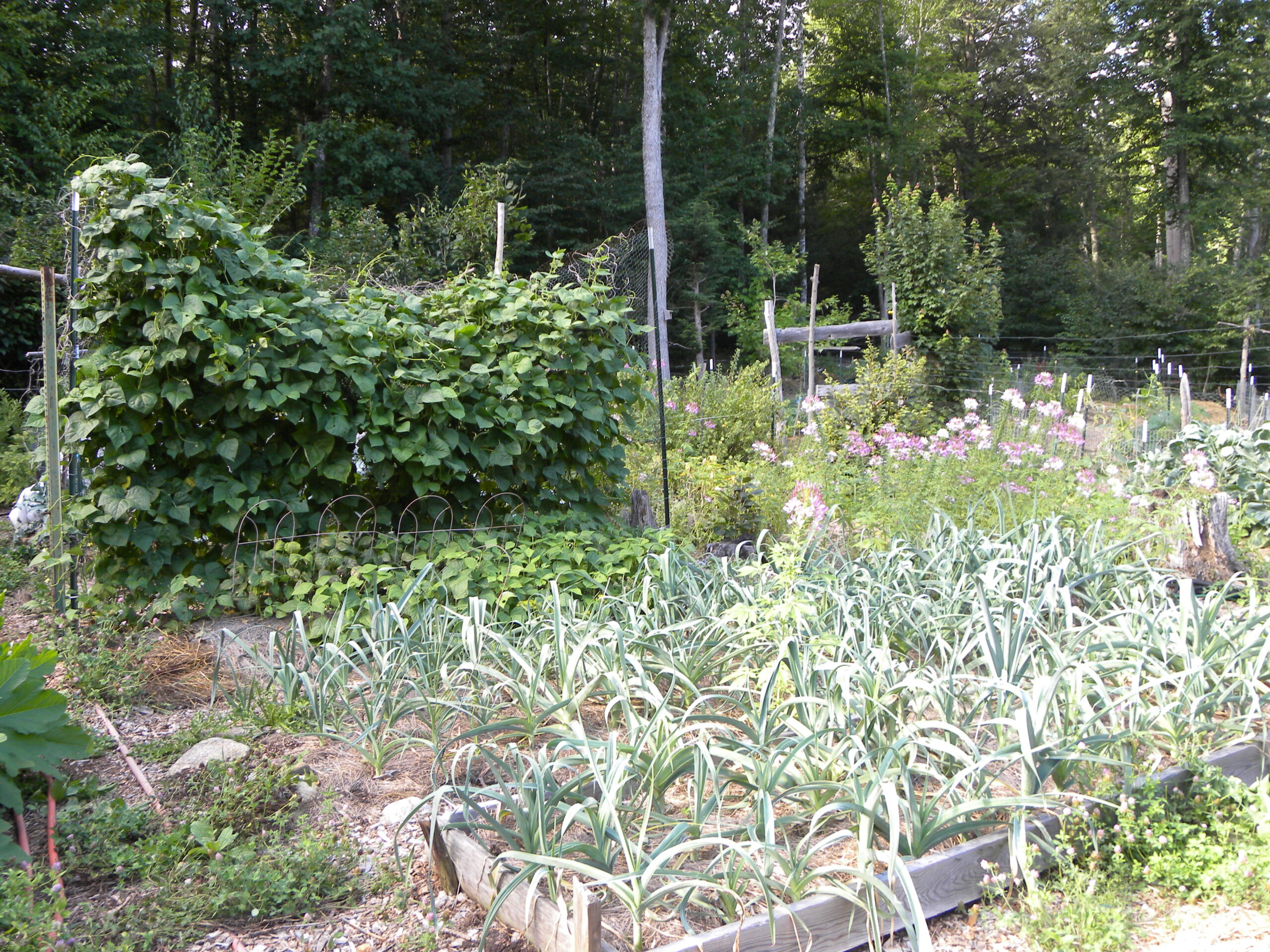
The Garden in July

I am a committed, joyful gardener who wants to teach everyone else to grow their own food, too! I encourage others to garden NOT because it’s easy and anyone can just do it. I have heard stories from people about how they tried gardening but ran into so many problems that the 10 tomatoes they ended up with likely cost them $15 each. It is frustrating and does happen! But I believe that it’s worth not giving up, rising to the challenge and learning the skills you need to have your own garden. Here are a few reasons why…

Environmental Benefits

For a few thousand years, many agricultural systems have created as many problems as they have grown food. The big traps we fall into are: monocultures, soil disturbance, and more recently, chemical use. Our current US conventional ag system is guilty of all of these sins.

Now, however, we have the information needed to grow in ways that can heal the planet. We can even reverse climate disruption if these techniques are implemented on a wide-scale! There are great people and groups leading new movements to change our large-scale food systems.

Another answer that I see clearly is that smaller food systems can be much easier to manage well and efficiently. More growers working smaller pieces of land can address problems of air & water pollution, water consumption, soil erosion and soil carbon loss while building a community’s food sovereignty (ability to feed themselves).
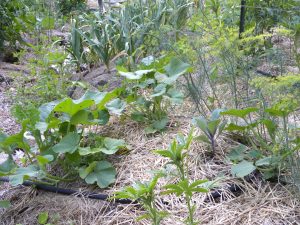
Garden, Mid-July

In your own garden, no-till is easy, diversity an obvious choice, and chemicals become unnecessary as you build healthy soil. You can eliminate food miles, use far less water, create healthy habitats for pollinators and other creatures, and sequester carbon in your own backyard!

Save Money

While there is the phenomonom of the $15 tomato, with a bit of skill and some good choices, gardening can absolutely save you money. The key is to identify what you like to eat, consider the prices for buying these, and find out which are easy crops to grow.
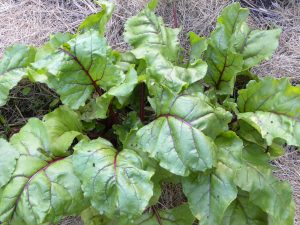
Beet Tops

Herbs and greens are pricey, high-end items, so if you love salad and basil, those should go to the top of your list. If you don’t like beets – don’t grow them. Even though they are an easy crop, this will feel like wasted effort in the end. Now, I know most everyone loves tomatoes, but – they are not easy to grow in New England! Tomatoes are a heat-loving crop that, in my experience, do better in dry conditions – does that sound like our climate? In our humid summers, there are numerous blights that will attack them, causing them to turn ugly and die before you get much from them. Actually, last year’s terrible drought in our area gave us the best tomato crops we’ve ever seen. If those conditions continue, maybe tomatoes
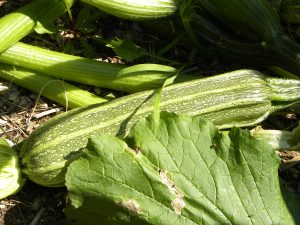
Zucchini

will become easy here, but meanwhile, be careful!

Don’t go overboard on one veggie either – remember that diversity is necessary in a healthy garden, and that by the 50th zucchini, it will start to feel less like well-deserved bounty and more like a curse.


Your Health

Every day there seems to be another study pointing to good nutrition as a key to good health. One of the problems we face is that much of our food contains fewer minerals and more chemical residues than in the past. You can buy certified organic (higher priced food in this case is actually cheap compared to health care costs). You can also give even more attentive care to a small plot you watch over and know you and your family will eat from.
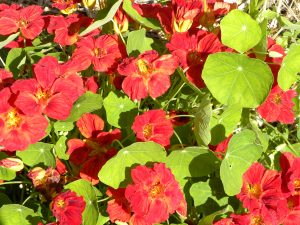
Red Nasturtiums

We also now know that gardening has positive effects on mood. Less depression and anxiety is a great bonus, don’t you think?


Connection to the land

It’s great to admire, love and watch our landscapes and wildlife. But, I think it’s even better for us to understand on a visceral level how much we depend on the land, the earth. In the US, where so many of us have been here for merely a few generations, we often lack a sense of rootedness and connection to place. We move and travel and don’t like to feel “tied down.” I don’t believe this is working out well for us.

First, I think it makes it easier to tolerate and ignore wrongs being done to the land when we think we can just move on.

Let me share with you this excerpt from an interview with author and environmentalist, Derrick Jensen: “It’s really problematical, because we can talk all we want, but the truth is, if my experience is that my water comes from the tap, I will defend to the death the system that brings that to me, because my life depends on it. If my experience is – not my philosophy – but if my experience is that my food comes from the grocery store I will defend to the death the system that brings that food to me, because my life depends on it. If on the other hand, my experience, my reality is that my water comes from a river then I will defend to the death that river, because my life depends on it. If my experience is that my food comes from a land base, from not a land base, but this land base, my land base, my home, I will defend to the death that land base because my life depends on it. So that’s part of the problem, we’ve been made dependent on this very system that is killing us.”
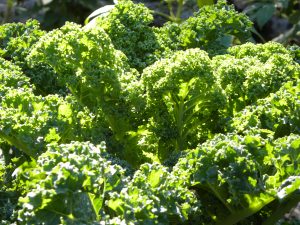
Kale

Second, I believe many people would feel happier and more secure if they felt they did belong somewhere.  (Making this sort of commitment to a place doesn’t necessarily mean you own that land, by the way.)

How well do you know the place you live? How was it used in the past? What sounds do you expect to hear when you open your windows this spring? What does the soil smell like after a rain? Where does water run across the landscape? How does food taste grown there?

My life is enriched just by asking these questions and looking for the answers.

As Robin Wall Kimmerer says in her book Braiding Sweetgrass: “This is really why I made my daughters learn to garden—so they would always have a mother to love them, long after I am gone.” 
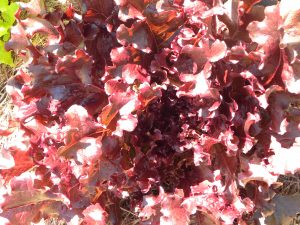
Red Oak Lettuce
Leave a Comment

Filed under Gardens, Soil, Weather

Planting Seeds: Start Where You Are

“Where do I start?” This question was asked of myself and 3 other panelists after a showing of the film “Seed: The Untold Story.”

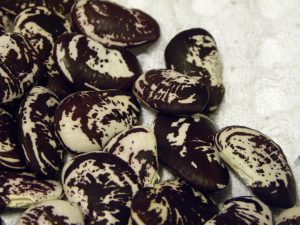
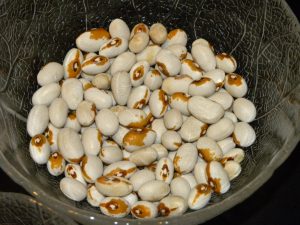
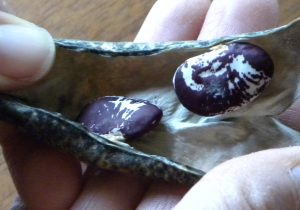
Christmas Lima Bean

Christmas Lima Bean

The Music Hall in Portsmouth NH screened this new documentary earlier in November and I was privileged to be on a panel for discussion following it with Andrea Cadwell, founder of Seeds of Community, Evan Mallett, Black Trumpet Bistro Chef/Owner and Heirloom Harvest Project Co-founder, and Erik Wochholz, Horticulturist and Curator of Historic Landscapes at Strawbery Banke Museum.

My quick summary of the film is that there has been a tremendous loss of diversity in our food supply, and a loss of control over seeds by those who actually grow food, brought on by the transition of seed out of the commons and into the realm of corporations. It also showed some of the dangers of conventional agricultural practices of pesticide and herbicide use, and geneticially modified food. The information in the film was disturbing, but the accounts of communities who are reclaiming their seeds and protesting the abuses of corporations was inspiring. And the photography was beautiful.

Back to our question – Where do I start?

Tiger Eye Bean

Tiger Eye Bean

This is an especially great question to contemplate when the topic is seed, because a seed is a start in itself. In every seed there is the possibility to begin life again for the plant that created it. If it gets what it needs to kick off and support the process (cold, fire, or simply soil and water, for instance), it will grow. All the directions it needs to become just what it’s meant to be are there. I have been farming or gardening for 20 years now, and I never fail to feel awe, gratitude and joy when a seed I planted sends up a shoot and down a root. Every time feels like a miracle, like magic.

For us humans, we struggle more with figuring out just what we’re meant to be and do. I can’t know what your answer is, of course, but here are my thoughts in response to being asked the question after the film last week.

First of all – it doesn’t really matter where you start! Even when you think of a seed, you can ask was the seed the beginning or was the plant that made the seed there first? It’s a circle, like so much in nature, and just stepping into the flow of it is what’s important. Which brings me to a question for you: what appeals to you, what do you feel called to or inspired to do on this subject? That’s a great place to focus.

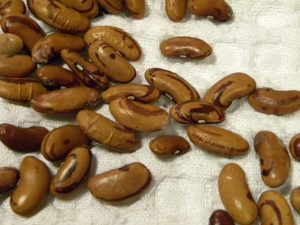
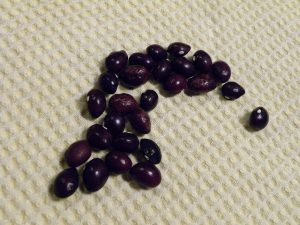
True Red Cranberry Pole Bean

True Red Cranberry Pole Bean

There are so many ways to be a part of this movement to take back our power. There has been a tendency in our society these last 100 years or so to decide that if something takes a lot of work, we’d be better off to have someone else do it for us and call that freedom. In some cases it just means we have to do other work in order to pay someone to do the original task for us, often with lower standards and less care. Other things have become so cheap that I guess we do get extra free time – which a lot of people spend watching TV or on Facebook (I don’t mean to judge – my life has some TV & Facebook as well!). I believe this amounts to trading away our real sovereignty and control over our lives.

So, on that personal level, do grow a garden, keep small

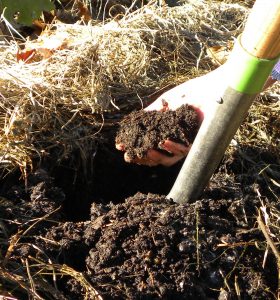
My Garden Soil

My Garden Soil

livestock, or go beyond that and become a farmer! We need more small-scale, deeply sustainable food growers. Use your yard, a community garden, or look for larger areas of land. Any food you grow will be fresher than almost anything you can buy, and won’t have the transportation footprint of supermarket options. What you don’t grow, look for locally at farmer’s markets, farm stands, CSAs, and sometimes healthfood stores. Learn to build your own soil – a dwindling resource that we are totally dependent on. I teach permacultural soil building techniques through Seacoast Permaculture if you are local. And, yes, save your seeds! For what you haven’t saved, turn to ethical seed sellers to buy from such as Fedco, High Mowing. and Seed Savers Exchange.

However, the problems we face are beyond one person’s ability to change. Join with others and make change on larger levels.

You can join groups working to educate about these issues and bring back these skills such as Seacoast Permaculture, Slow Food Seacoast, Seacoast Eat Local and NOFA.

Christmas Lima Beans

Christmas Lima Beans

You can get involved in efforts to change legislation like GMO food labeling, pesticide use, and supporting small farmers. A few options are NOFA-NH, Just Label It, The Pesticide Action Network, and March Against Monsanto.

There are also groups who are challenging the rights of corporations to patent life, and to have so much political clout. Seeds and food are not the only issues in which huge entities organized solely to make profit are deciding our future. NH has a history of challenging this problem, led by our own Doris “Granny D” Haddock, who walked over 3,200 miles across the United States to advocate for campaign finance reform at the age of 88 years old. Her work is carried on now by The NH Rebellion.

I should say that all of these groups are non-partisan. Regardless of how you feel about the recent election you are welcome in them!

Maine Yellow Eye Beans

Maine Yellow Eye Beans

I hope this gives you ideas on where you might be able to step in and make a difference on sustainable food and diversity. The great news is that any of these steps are fun, and fulfilling. They’ll improve your health and life. Sure, it takes some work – but don’t most things worth having?

It’s worth noting that this film looked at food plant diversity, but the same situation is faced for livestock breeds. I encourage you to research that, and maybe that will be their next documentary!

ADDENDUM: I didn’t feel like the film did a great job of precisely explaining some of the terms used in reference to seeds. I thought I’d give you a few definitions, especially if seed saving is something that you now want to try your hand at after seeing this beautiful film:

Heirloom: a plant variety that has a history of being passed down within a family or community. All heirlooms are open-pollinated, but not all open-pollinated plants are heirlooms.

Open pollinated: seeds that will “breed true.” When the plants of an open-pollinated variety self-pollinate, or are pollinated by another of the same variety, their seeds will produce plants generally identical to their parents. Saving seed from these plants is accessible to all farmers and gardeners.

Hybrid seed: seed produced by cross-pollinated plants. This can occur naturally, but in our commercial seed stock, hybrids are created by human intervention. The positive side of this is the phenomon of hybrid vigor which makes these crosses vigorous and high yielding. However, the seed produced is genetically unstable and cannot be saved for use in following years, which leads to a dependency on seed companies. Hybrid seeds can be stabilized, however, becoming open-pollinated varieties, by growing, selecting, and saving the seed over many years. Hybrid is NOT the same as Genetically Modified, which bypasses nature’s species boundaries through laboratory means to create plants which would never occur naturally.

You can learn more about seed types here.

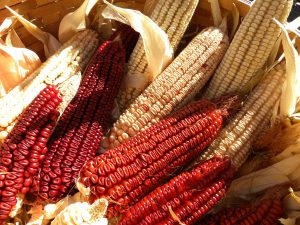
Hop McConnell Speckled Corn Harvested

Hop McConnell Speckled Corn Harvested, 2016

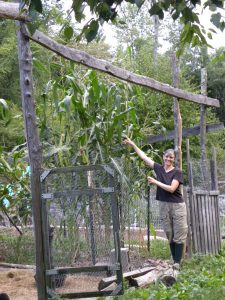
Hop McConnell Speckled Corn Growing, 2016

Hop McConnell Speckled Corn Growing, 2016


2 Comments

Filed under Gardens, Uncategorized

My Honey Bees, Healthy but Hungry in 2016

I did not have a great beekeeping season here in NH, but not for the reasons you might have heard about, like colony collapse disorder, pesticide kills, or varroa mites.

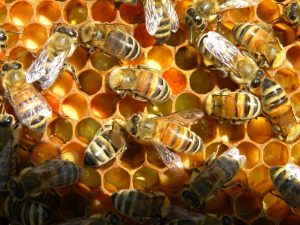
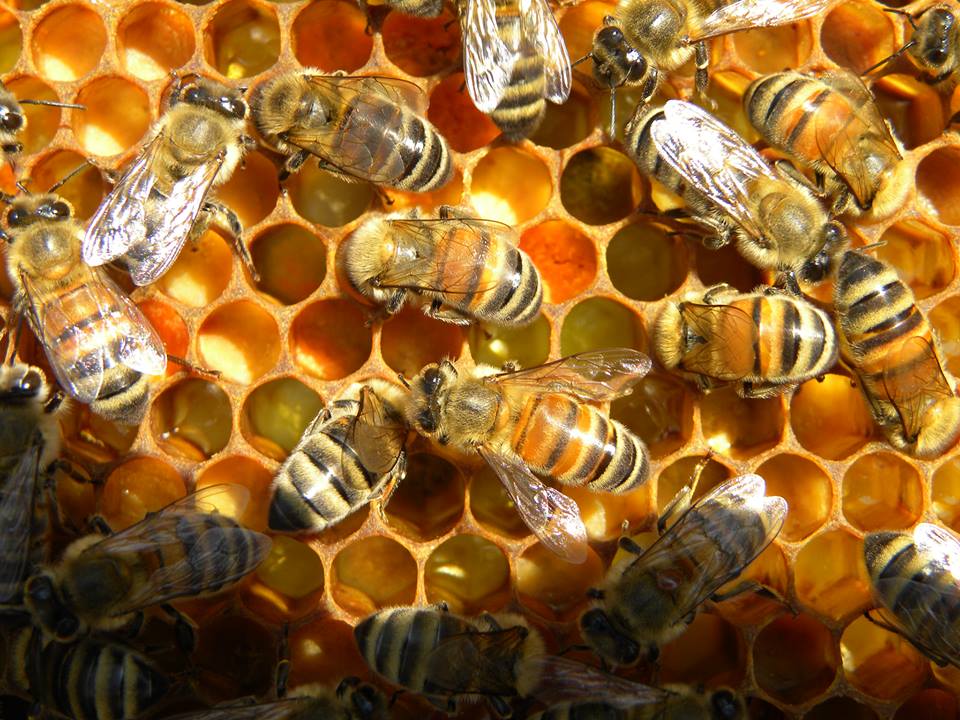
bees-pollen in comb

Orange & Yellow Pollen in the Comb

My hives came through last winter well, four full hives and one smaller nucleus hive.  The spring was slow to really get going, but they hung in there and started building up their work forces well, bringing in dandelion nectar and so much beautiful pollen (you can see them packing it away in the photo here).  I implemented my non-chemical mite control strategies at the correct times and my bees looked and acted healthy.  I hoped for a great honey harvest, and in the meantime started making splits to start new colonies to expand my apiary.  I planned to go into this winter with at least five nucleus colonies that could be my new hives for 2017 rather than buying any Southern bee packages.

And then… the drought hit us.

At the beginning of May we in the Seacoast of NH were classified as “abnormally dry” and by now we are at the “extreme drought” level.  All over New England, in a strange, spotty pattern, the drought is hitting farms, wildlife, and wells.  Hay was hard to come by (we had to order it from Vermont), our garden and orchard suffered… and the bees.

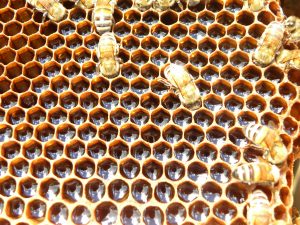
Nectar in Comb

Turning Nectar into Honey

The nectar that honey bees bring to their hives to turn into honey starts off with about 80% water content.  So, if a plant is dehydrated it can’t make much nectar.  The bees go out to forage, but just don’t find much to collect to make honey out of.

My overwintered hives only made a small amount of extra honey – they need the first 75# for themselves, and there wasn’t much more than that.  What excess I did pull out, I gave to my new little nucleus hives who barely made any with their small number of foragers.  I have had to step in and feed them sugar water – which is just not as nutritious or healthy for them.  But bad food is better than starvation, and the weather is not their fault.

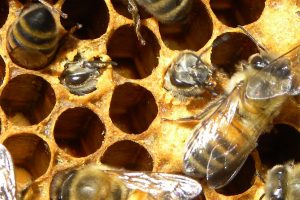
Workers Emerging

Workers Emerging

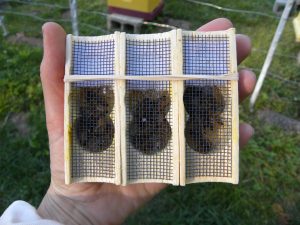
All my hives are strong and show no signs of illness at this point.  I kept up my mite control all summer – drone comb removal, doing some splitting to create broodless periods, and dusted them with powdered sugar at specific broodless times.  Most importantly, I got all my new queens from Northern beekeepers: Troy Hall in NH and Bob Brachmann in upstate NY.  The research I’ve seen and my experience

Queen Bees from Troy Hall

Queen Bees from Troy Hall

point to the tremendous importance of genetics and of bee stock that is adapted to our colder climate.  Counting on genetics, breeding and evolution to help us save our bees is certainly not a quick fix – but, as Permaculture Principle #9 tells us: Slow and Steady Wins the Race.

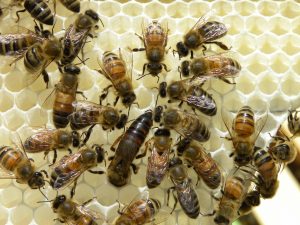
Two of my hives also made their own queens, which I will be watching

Cold Country Queen Bee on comb

Queen Bee on comb

closely to evaluate.  They were hives with fabulous Russian Queens from Bob Brachmann.  They came through two winters beautifully, have been gentle and productive.  But I had no say in the drones their daughter queens mated with and don’t really trust that all my fellow local beekeepers aren’t using a lot of Southern bee stock.  There’s actually not enough Northern stock to supply us all at this point.  So, I fear that I will have trouble doing good queen breeding here – but it never hurts to try, especially when the bees did most of the work of it!

I am feeding and prepping my hives for a winter that’s predicted to be a long, snowy one.  We’ll all try to get through that and hope for a better season next year.

Beyond hoping, I am also reminded that the personal is political and it’s important to keep agitating for good environmental and energy policy. I have plans to get more involved with some of 350 New Hampshire‘s campaigns over the winter, while the bees and gardens sleep!

Leave a Comment

Filed under Honey Bees