The Ancient Tradition of Agroforestry

This past November, Steve attended a workshop on agroforestry practices at Wellspring Forest Farm in New York led by Mark Krawczyk & Steve Gabriel. Steve has been experimenting with these techniques for years.  This workshop, along with the books both the leaders have written, has deepened his understanding of the systems so he can make even better use of them. Here are his reflections, which tie in multiple permaculture principles:

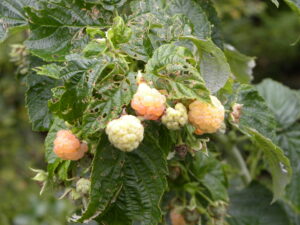
Berries from perennial plants are abundant in these systems

For more than ten thousand years, our ancestors lived in extraordinary symbiosis with woody plants. Fossil fuels did not yet make unsustainable and polluting mass production possible. Humanity’s regular harvest of young wood encouraged tree species that sprout back reliably and renew the vigor of a tree’s eternal youth. Cord wood illustrates this difference. A mature forest in NH might sustainably produce 1 cord per acre per year. When managed as an established coppice stand cut to the ground every 3-5 years, each acre can consistently produce 5-10 cords per year! In the case of oak, fast-growing coppice wood is actually denser than old growth wood, thus more useful as fuel in less space.

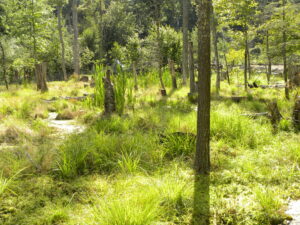
Edible mushrooms can thrive in the shade of coppice and pollards

But heat for warmth and cooking were just the beginning of how people met their needs with wood, often from the same land that served numerous other purposes. Such function-stacking embodies the principles of permaculture, including catch and store energy (#2), obtain a yield (#3), use and value renewable resources and services (#5), produce no waste (#6), integrate rather than segregate (#8), Use small slow solutions (#9), use and value diversity (#10), and use edges and value the marginal (#11). We are just beginning to rediscover the depth and nuance of what is possible and was, until recently, understood by every human who has lived in a wattle and thatch cottage since the last ice age.

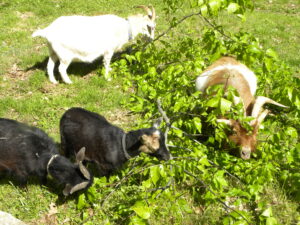
Woody plants are excellent goat food (fodder)

Intensely managed coppice, pollard, hedge and wood pasture lands provided food, livestock fodder, tools, various supplies for crafts and cottage industry, building materials, rich hunting grounds, transportation infrastructure, fencing, fishing weirs, musical instruments, and most everything else people needed. Indeed there were hardly any other options available for securing needed resources, especially as the population of people increased. It was common knowledge how to use a “froe” to make “hurdles”, how to lay “pleachers” and bind “heatherings”, how to “handle” an axe (literally), how to cut “chips” with hand tools, and how to carve wood with an adze, draw knife, hewing axe and other tools that are now all but forgotten. Such carving was critical to building strong ships that could reliably cross oceans. The extensive jargon people used to describe these practices and tools demonstrate its importance as the center of economic productivity. With time and evolving specialized expertise, wood was also the basis of charcoal production which fueled the refining of iron ore into the fundamental tools of early civilization.

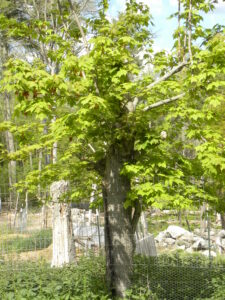
A Pollarded Maple

If you can picture a world before chainsaws, skidders, trucks, and portable sawmills for cheap dimensional lumber, it becomes clear that smaller diameter wood is safer and easier to process with basic hand tools. Even with modern options, this reality is still true. Most common species of temperate trees – except evergreens – sprout back well if a clearing large enough to provide abundant sunlight is made and the stump is protected from excessive impact by herbivores. Coppicing involves cutting to the ground every 3-20 years, producing fairly straight rods and poles. Pollarding maintains a tree small enough for easy management yet keeps most of the foliage out of reach of herbivores, by cutting the central leader at 6-10 ft. Laid hedges are tightly planted rows of vigorous shrubs (such as willow, hazel or hawthorn) cut partway through and laid down to encourage low growth, with horizontal pieces woven between vertical stakes to form a tight living fence. Dead brush can similarly be woven between stakes to form a dead hedge fence where light is less abundant.

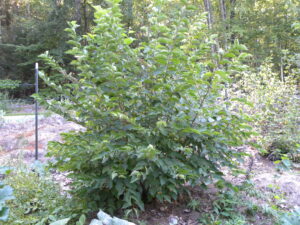
Hazelnuts are a great hedge shrub

In this way abundant animal fodder, posts, poles, rods, stakes, fencing, basket-making twigs and various other useful supplies can be produced quickly on a few sunny acres. At the very least, keeping a few trees alive and forever young moderates temperature extremes and builds soil fertility from the leaves they drop. Consider these factors if you seek to build greater sustainability and self-reliance on your homestead, in your community and throughout our troubled world.

For more information on this topic consider attending my upcoming online class and in-person tour through Seacoast Permaculture.

One version of a silvopasture system

Leave a Comment

Filed under Interdependence, Permaculture principles, trees, Uncategorized

2025 On the Homestead

As the year comes to a close, I circle back to permaculture principle 1, Observe and Interact, with special attention to principle 3, Obtain a Yield. I’ll start with reflections, then share our harvest numbers.

Every year I try to come up with a title that captures something unique about the season. That has not worked as well as I hoped because events that were strange are becoming all too normal, like droughts. However, we did just have an event I sure hope won’t repeat often, which leads me to call this the Year of the Hailstorm.

Hail-damaged Zucchini

Weather

While the spring began with lots of rain, it didn’t last, and we lapsed into another record breaking drought year. In fact, it was the driest summer in the 131-years of keeping records for NH, according to NOAA. It was also slow to warm up, with many crops just taking off when the rain stopped falling. That was a challenge, but we were doing well with our water saving and reuse measures.

Then, on August 27, we were hit with a short but intense hail storm. I have never seen anything like it. Sheets of ice pouring down, bouncing around, covering everything, and shredding plant leaves and damaging fruit as it fell. It left an inch of ice on the ground covered by shredded leaves. The big, fragile leaves of the squash were ripped apart, and the developing fruit ended up covered in cuts. That was a huge loss for us as we usually grow hundreds of pounds of winter squash to feed to the goats and chickens as well as ourselves all winter long. Last year, we brought in 878 pounds – this year we harvested 289 pounds, all of which are too injured to last long.

Hail Damaged Squash Plants

The cuts healed over, but these butternuts will not last long


Rodents, Pests and Diseases

In this category, we are happy to have multiple successes to report.

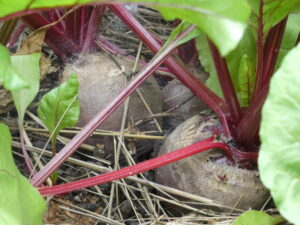
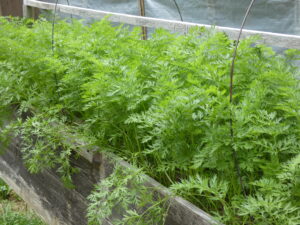
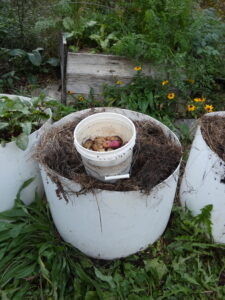
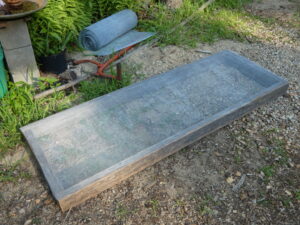
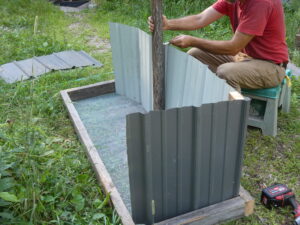
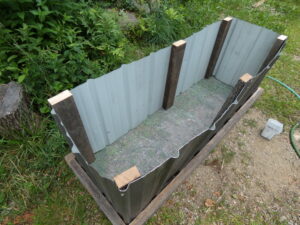
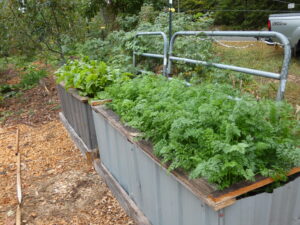
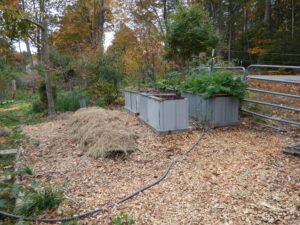
Our new vole-thwarting raised beds and barrels are working well, especially for carrots and beets. We used found materials of imperfect metal roofing and wood pieces to construct four more that are extra tall. We create the soil in them using sheet mulch and hugelkultur techniques – rotting wood, manure, animal bedding, fallen leaves and seaweed, topped by finished compost to plant into. So far, voles have not infiltrated them, and the height makes them much easier to access and care for.

Building Vole-proof Beds

Carrots & Beets Thriving in the Raised Beds


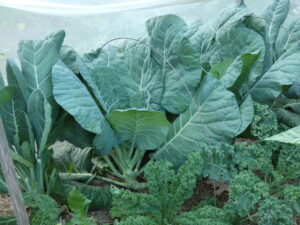
We’ve also been more diligent in covering our brassica crops – kale, collards, broccoli and Brussels sprouts. Without the cabbage loopers (Trichoplusia ni), imported cabbageworms (Pieris rapae), cross-striped cabbageworms (Evergestis rimosalis) and diamondback moths (Plutella xylostella) reaching them, they grew into big, beautiful plants, especially the collards. They did have aphids multiply under the row cover, but aphids don’t do very much damage compared to all those

Collards big enough to shade the kale!

caterpillars. The Brussels sprout plants grew tall, but never made sprouts. My research shows there can be many reasons for that outcome, and I suspect the drought was the problem this time. 


This was by far our best strawberry year, on the whim of the chipmunks to let us have them. I had given up on competing with the rodents and was thinking of the carpet of strawberries in parts of the orchard as a ground cover not a food crop. Then, they just gave them to us this year. I mean, they took a few, but usually they eat every one of them before they even turn red. My only guess as to why, is that the wet spring added some water weight to the berries and they were not super sweet. Whatever the reason, we harvested 97 ½ pounds, which I canned into 34 pints of berries and 10 pints of juice. After boiling them down, they were plenty sweet for us!

Peaches Preserved

The squirrel population did grow over the season, and some of our late season peaches were gobbled up by them, leaving just pits around the trunk, but we still got our share – 304 pounds. Last year’s harvest was twice that, but 2024 was the Year of the Peaches here and I don’t expect another bumper crop like that anytime soon.

Labor

Having enough time to spend tending the homestead despite our other off-farm demands will always be a challenge. We do feel that we have found a decent balance, not taking on too much in a season that we cannot keep up. We lean into the crops that take less of our time, like winter squash, drying beans, and root crops, and are careful not to overdo the more time-intensive ones, like snap beans and peas.

Animals

Here again the trick has been to learn what the land and our workload can handle for optimal health for us all (Observe and Interact). Over time we have created systems that make management easier, like the wheeled chicken “tractors,” the movable electric netting for rotational goat grazing, and the water catchment stations. The poultry thrived, and we continue to keep the predators out despite knowing we are surrounded by wild critters who would love to eat them.

The goats are doing well, although not all went exactly as planned. Georgia had an accidental (in our opinion) pregnancy, and the kidding ended up being a complicated one. We were able to reposition the stuck kid, so it worked out, but it was stressful. We are also having trouble selecting one of Luna’s daughters to join her. Luna has been our best milking goat, but so far her kids have not been living up to her legacy of health, productivity and ease of managing. My ideal is to have four does in milk, two mother-daughter pairs, but we have not been at that level for a couple of years. At our small scale we have to keep the number of goats low, but that makes breeding and selecting a slower process. Hopefully our new doeling, Lucia, who is Luna’s granddaughter, will help get us back on track.

Meet “Living Land Lucia”

This year’s drought has made getting enough good quality hay difficult. We did bring quite a bit of nice extra forage home for them, between Steve’s landscaping work and fall apple gleaning around the Seacoast.

Paw Paw Tree

Also…

One of our paw paw trees is finally taking off!  After failing to get them established for years, we seem to have figured it out.  Early planting of very small trees, giving them shade the first two years, and being very patient is what seems to have worked for us.  There is a second variety nearby, which is a little younger and still very small – but alive, so we are hopeful.

We continue to succeed at growing all our own seedlings to start the garden. It is another great yield for us.  We’re happy to get to start them out with more sustainable materials, organic methods, little transport stress, and we have no risk of bringing back diseases or pests, like cutworm.

Our Own Seedlings

2025 Harvest Numbers

Alliums – garlic – 17.5# (130 heads); 130 garlic tops – ; leeks – 61#, perennial onions – 8.5#

Beans & Peas – snap beans – 52.75#; dry beans – 10.25#; sugar snap peas – 6.25#

Brassicas – broccoli – 4.25#; brussels sprouts – 1.75#; kale – 8.75#; collard – 20.5#

Corn, popcorn – 7#

Cucumber – 11#

Eggplant – 0#

Lettuce – 13.75#

Herbs – basil – 4.25#; dill – .5#

Mushrooms, winecap.5#

Potatoes – 31.5#

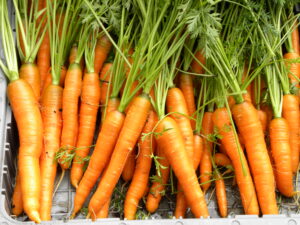
Roots – beets – 25#; carrots – 56.75#; parsnips – 53.25#; radishes – 204, turnips (gold ball) – 1#; dandelion roots – 30.5#

Squash – summer – 69.25#; winter (butternut and long pie pumpkin) – 289#

Tomato – slicing – 39.5#; cherry – 11.5#

Perennial Veggies: asparagus – 1.5#; rhubarb – 23.5#

Hazelnuts – 1.5#

Fruit: blueberry – 7.5#; crabapples – 30#; currants, red & white – 4.5#; clove currants – 6#; goumi – 7.5#; grapes – 3#; honeyberry – 9#; jostaberry – 2#; mulberry – 3#; peaches – 304#; raspberry – 1#; strawberry – 97.5#

Honeyberries

Maple syrup – 5 pints

Sea salt – 1.25 gallon

We brought in 58 gallons of goat milk; 114# goat meat; .5# goat lard

Our poultry harvest came to: 1,487 (124 dozen) chicken eggs from 10 hens; 492 (41 dozen) duck eggs from 5 ducks; chicken meat – 76#

Gleaned crops: apples – 550#

Food Preserving

Preserving food is how we eat from our farm year-round. Here’s a summary of what I put up this year:

Canned: peaches – 28 quarts; strawberries – 34 pints; honeyberries – 9 pints; clove currants – 7 pints; grape juice – 1 pint; strawberry juice – 10 pints; goumi jelly – 6 ½ pints; currant jelly – 3 ½ pints

Dried: peaches – 10#

Refrigerated: lactofermented cucumber pickles – 6 quarts

Frozen: blueberries – 1 gallon bag; snap beans – 8 pts; basil pesto – 11 ¾ pints; chevre cheese – 20 pints; mozzarella cheese – 12#; and most of the meat.

Root cellared: carrots, beets, parsnips, dandelion roots.

We store these crops in a cold room: garlic, potatoes, winter squash, and apples.

These are stored on the shelf: dried beans, popcorn.

Other yields we enjoyed included: wood for heating, water captured for the garden and animals, medicinal herbs, exercise, clean air and beauty.

In looking it over now, we can see that our particularly successful crops this year were strawberries, snap beans, collards, leeks, parsnips, radishes, zucchini, carrots and parsnips.

We had disappointing yields from our winter squash, Brussels sprouts, eggplant, grapes and pears.

Looking Ahead

Fall projects freed up more discarded metal roofing so we will make more raised beds to get our root crops back to thriving, able to fill the root cellar again.

Our fall Fedco tree order will bring us Asian pears to plant in the spring. They are not as tasty as European pears, but they mature faster. I love pears and am getting impatient with the many trees we’ve put in here that have yet to produce any fruit for us.

After taking a fall workshop in the forestry practices of coppice and pollard management, Steve is excited to improve our forage potential on site through better silvopasture systems. That will include experimenting with hedge-laying, which he has winter reading lined up to prep for. 

Thank you all for reading, even to the end of this post!  We hope this next year is a productive one for us all, individually and collectively.  There is a lot of often messy work to do – may it bear beautiful fruit.

Goumiberries

4 Comments

Filed under Chickens, Food Preservation, Gardens, Goats, Permaculture principles, Poultry, Uncategorized, Weather

Accepting What We’re Offered (Principle 5)

The world is full of systems that create the conditions for life – including humans – to thrive. Permaculture Principle 5: Use and Value Renewable Resources and Services asks us to notice, respect and work with those instead of turning to scarce resources and destructive technologies.

In my last post, I discussed Principle 2: Catch and Store Energy. These two principles are closely related, both asking us to notice and choose to use energy flows that easily regenerate, to skim the excess versus deplete stores that cannot be refilled quickly.

Coming up now are few examples which I appreciate and know I depend on: pollination, pest control, rain, soil and human beings.

Pollination has caught people’s attention over the past couple of decades, unfortunately because of the collapse of honey bee populations and the decline of similar species. I’m happy to say we have an abundance of insects here. With the diverse ecosystem we’ve encouraged and by not using any harmful chemicals we have created an oasis for them. We see bumblebees, butterflies, moths, flies, wasps, beetles, hummingbirds and bats. Having held the job since before humans were around, they are much better at it than we are. One day of hand pollinating fruit trees would convince you to revere these amazing little workers.

Other critters (or sometimes the same ones) offer pest control services.

Frogs also control problematic visitors, like slugs

We have learned that often when an insect comes to chew on our plants (a “pest” to us), it isn’t long before another creature shows up to eat them. While my focus is on food plants, I make space for flowers as well since a succession of blooms keeps helpful friends living here with us. The bare “clean”

Slug Control Experts

fields and monocrops of the industrial agriculture system has to turn to chemicals because they’ve driven out their potential partners in food growing.


Then there is soil. A healthy, biologically active soil recycles nutrients while feeding and tending to plants, and actually creates more soil in the process. I was told long ago by a fellow farmer that we are not plant growers, we are soil microbe ranchers. That outlook has served me and my gardens well. Also, by understanding how soil functions we can work with or mimic it in helpful ways. Composting and rotational grazing for instance. The permaculture techniques of sheet mulching and hugelkultur copy how soil is built in forest and grassland systems, but with our intervention happens much more quickly. It can take a forest 1,000 years to make an inch of soil, a functioning grassland system around 100 years, and a permaculture garden can make inches in a single year.

Good Soil Grows Great Food

When I see and tap into these renewable resources and services, my garden is abundant, my animals are healthy, carbon is kept out of the atmosphere and water is stored here, all without chemical fertilizers. Plus I do not send valuable resources off to the landfill.

This year’s record-breaking drought once again pointed out the importance of the water cycle to our lives. After previous dry years we invested in serious rain catchment infrastructure. We created one big and multiple small ponds, and set up large totes for catching and storing water off of our buildings. However, there is no irrigation system we can install that rivals rain falling over the land.

Currently when people talk about renewables they are usually referring to human made technology like solar panels, wind turbines, and electric vehicles. But underlying all of those are the ecological systems that operate on this planet. Sun and wind are abundant and not in danger of running out, but turning that energy into electricity takes technology and scarce resources. For instance, solar panels like we have on our house are made of plastic (oil), plus metals and rare earth minerals that need to be mined. Using sunlight to directly heat, dry, and see by is even better.

As Wendell Berry pointed out in a talk years ago, humans are also solar-powered!  All animals are, through our relationship to plants.  Plants can take the credit for capturing sunlight, then we eat the plants and/or we eat other animals that eat the plants.  Every time we take work out of human hands and mechanize it, we have moved away from clean, renewable energy.


There are so many other examples, many of which we do know but just don’t notice. Can you think of more? Listen to Charlie Mgee’s song for other ideas.  Try tuning in and looking around.  Maybe you will see, and hopefully feel grateful for, all the processes that freely support us.

Goats Mow Grass, Fertilizing as They Go

2 Comments

Filed under Gardens, Interdependence, Permaculture principles, Uncategorized, Weather