Last March I delved into Permaculture Principle 4: apply self-regulation and accept feedback. One of the topics discussed was vole control. One reader asked for more details about our techniques to deal with them, especially how we construct our raised beds. This post will delve further into how we have approached it, presented through the lens of accepting feedback to make positive changes.
Beets and Carrots, Saved from Voles
Our first few years at Living Land there weren’t that many voles. Our very first potato planting yielded about 15 pounds of potatoes for everyone one pound we planted! Carrots and beets were similarly successful. However, we had also set up something of a vole haven so it was only a matter of time. First of all, we were planting things they loved to eat, both the root crops and young fruit trees with delicious inner bark. I was also creating deep soil and covering it with mulch. Lastly, we have a lot of fencing set up to protect our garden from herbivores and our poultry from carnivores. So, the foxes and coyotes and bobcats can’t get in to help us keep the vole population in check. This resulted in a plummeting number of intact root vegetables at harvest time. Our last potatoes planted directly into the garden yielded 1/2 a pound for every pound we had planted. I’m willing to share, but this was ridiculous!
For a start, we do have two cats who we let out to patrol for rodents. We do put bell collars on them which in our experience makes it nearly impossible for them to catch birds. It probably also makes it harder for them to catch rodents but we feel this is a reasonable compromise between competing ideals. One of our cats is a much better hunter than the other for some reason. Tabitha, now 18 years old, killed and delivered five voles to me this week alone. Still, that has not been enough to keep our veggies safe.
I tried moving the root vegetables to various parts of the gardens and orchards, but the voles always found them. This is when we decided to try to make special beds to protect our harvest from voles.
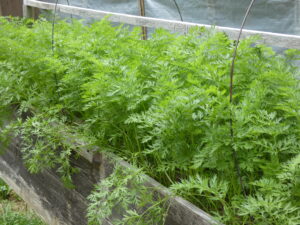
Standing Bed with Carrots
For Root Crops: Carrots and Beets
A friend gave us two standing beds made mostly for ergonomic reasons. These are high up off the ground, incredibly easy to work with, and definitely vole proof. However, we’ve also found them difficult to keep watered and in these times of drought that is a real issue. So, we have come up with a design of on-ground, vole-resistant raised beds.
We create them using as many found materials as possible. Steve brings home a lot of discarded pallets that we can use as an initial structure or take apart for the wood. We also had some small pieces of metal roofing that work great for sides. On the very bottom we staple metal mesh / hardware cloth with a tight weave, usually ¼ inch. (See below for photos of the process.) It will eventually rust and rot, we know, but we hope it will take a while and give us maybe a decade of growing. The size of the bed is mostly dictated by the materials we have on hand the space we’re putting it into and we want it small enough that we can move it around to get it started. We put them straight on the ground and then sheet mulch into them, layering manures, seaweed, leaves, etc. The bigger ones we started with some big hunks of wood at the bottom like a hugelkultur bed.
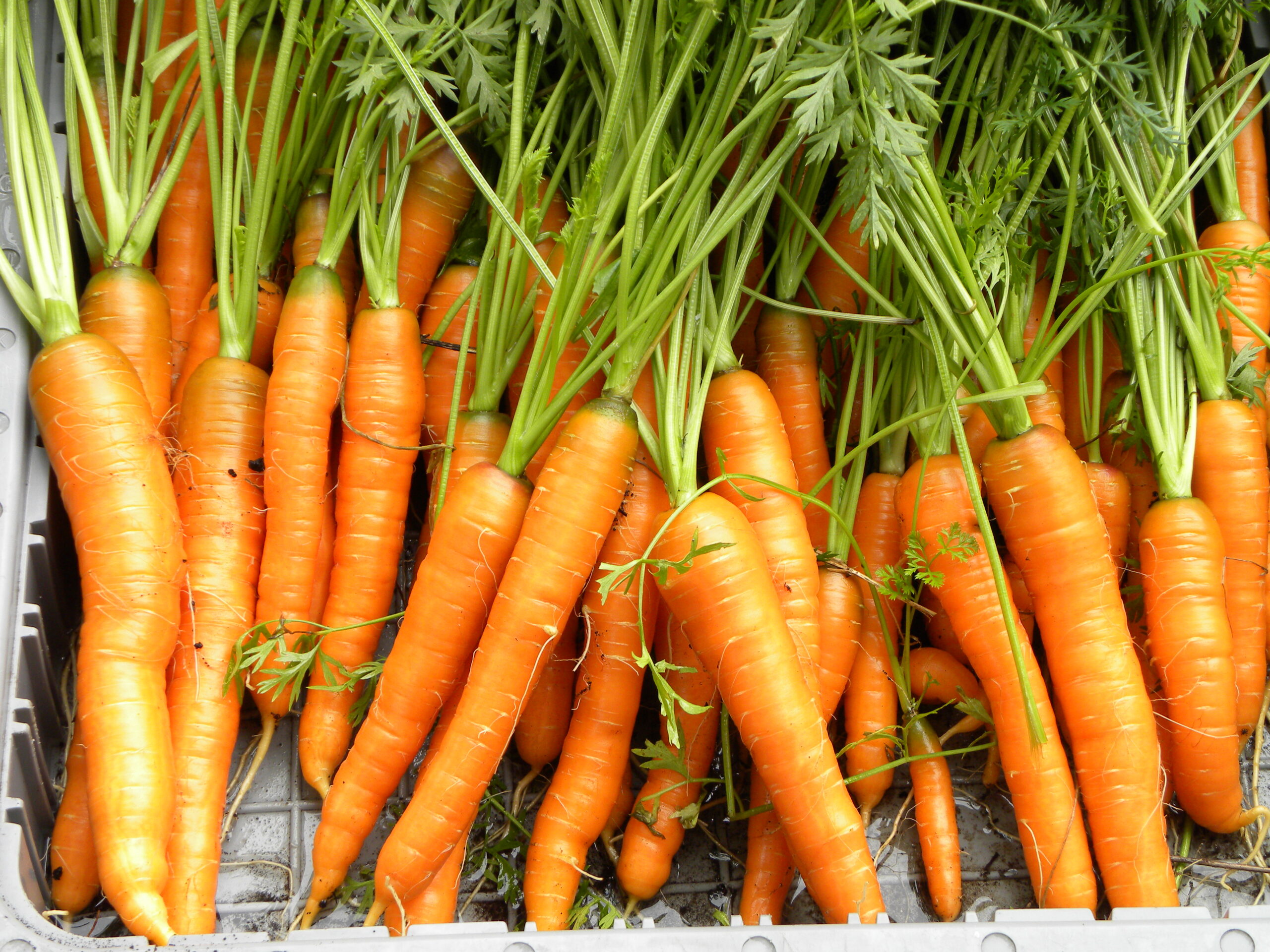
We have been using these for a few years, making new ones each season. Early on a few were just about a foot tall and if grass grew up around them voles would access them from the top. We could tell because the bottom part of the beets and carrots that they usually decimate was fine but the shoulders were gnawed on. We extended the height and made sure to cut back the grass for these and now they are working.
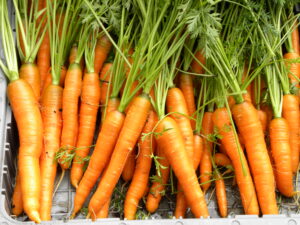
Carrots from Protected Bed
For Potatoes
Plastic barrels have made their way to us over the years, mostly intended as rain barrels. Now that we have invested in much larger containers for rain catchment, we cut these in half, drilled some holes in the bottom and have been using them for potato growing. We are having mixed results. I think that keeping them watered is the biggest issue. Potatoes are very sensitive to getting enough water and it has not been easy to keep these moist. Last year before I planted the potatoes I put a wooden stake into the middle of the barrel. I left it there and would wiggle it around and water into that middle hole, throughout the season. This did seem to work better as less of the water simply ran off
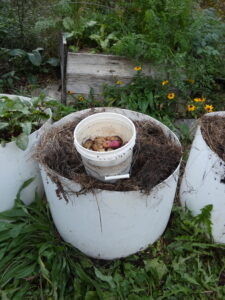
Potato Barrels, Harvest on Top
around the edges. As a bonus, the barrels are somewhat easier to harvest. We can put down a tarp tip over the barrel and pull out the potatoes in the fall. We get nowhere near those original fabulous yields, but it actually felt worth doing this last time with about a 5 to 1 harvest.
We will continue to observe, interact, accept feedback and adjust but we are glad to have made some progress in learning to live with these furry, competitive neighbors of ours.
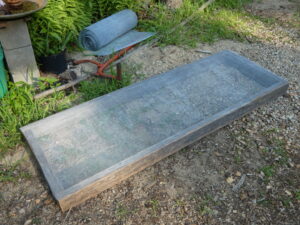
Bottom of be with stapled on wire mesh
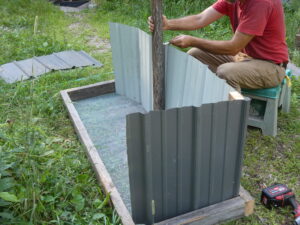
Attaching supports to hold sides in place
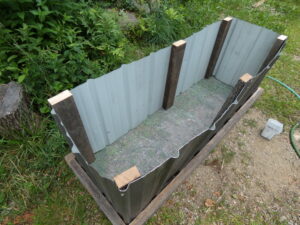
With sides added
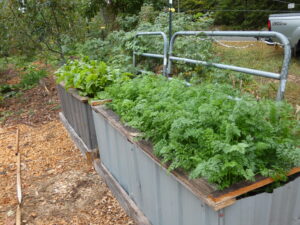
Wood added on top for further structure. Beds placed and planted, now growing well.
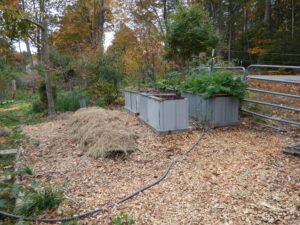
Four raised beds, plus a sheet mulched mound ready to plant.