Tag Archives: indigenous

The Ancient Tradition of Agroforestry

This past November, Steve attended a workshop on agroforestry practices at Wellspring Forest Farm in New York led by Mark Krawczyk & Steve Gabriel. Steve has been experimenting with these techniques for years.  This workshop, along with the books both the leaders have written, has deepened his understanding of the systems so he can make even better use of them. Here are his reflections, which tie in multiple permaculture principles:
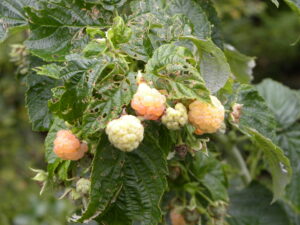
Berries from perennial plants are abundant in these systems

For more than ten thousand years, our ancestors lived in extraordinary symbiosis with woody plants. Fossil fuels did not yet make unsustainable and polluting mass production possible. Humanity’s regular harvest of young wood encouraged tree species that sprout back reliably and renew the vigor of a tree’s eternal youth. Cord wood illustrates this difference. A mature forest in NH might sustainably produce 1 cord per acre per year. When managed as an established coppice stand cut to the ground every 3-5 years, each acre can consistently produce 5-10 cords per year! In the case of oak, fast-growing coppice wood is actually denser than old growth wood, thus more useful as fuel in less space.

Edible mushrooms can thrive in the shade of coppice and pollards

But heat for warmth and cooking were just the beginning of how people met their needs with wood, often from the same land that served numerous other purposes. Such function-stacking embodies the principles of permaculture, including catch and store energy (#2), obtain a yield (#3), use and value renewable resources and services (#5), produce no waste (#6), integrate rather than segregate (#8), Use small slow solutions (#9), use and value diversity (#10), and use edges and value the marginal (#11). We are just beginning to rediscover the depth and nuance of what is possible and was, until recently, understood by every human who has lived in a wattle and thatch cottage since the last ice age.
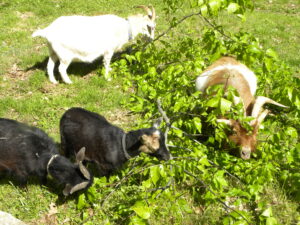
Woody plants are excellent goat food (fodder)

Intensely managed coppice, pollard, hedge and wood pasture lands provided food, livestock fodder, tools, various supplies for crafts and cottage industry, building materials, rich hunting grounds, transportation infrastructure, fencing, fishing weirs, musical instruments, and most everything else people needed. Indeed there were hardly any other options available for securing needed resources, especially as the population of people increased. It was common knowledge how to use a “froe” to make “hurdles”, how to lay “pleachers” and bind “heatherings”, how to “handle” an axe (literally), how to cut “chips” with hand tools, and how to carve wood with an adze, draw knife, hewing axe and other tools that are now all but forgotten. Such carving was critical to building strong ships that could reliably cross oceans. The extensive jargon people used to describe these practices and tools demonstrate its importance as the center of economic productivity. With time and evolving specialized expertise, wood was also the basis of charcoal production which fueled the refining of iron ore into the fundamental tools of early civilization.
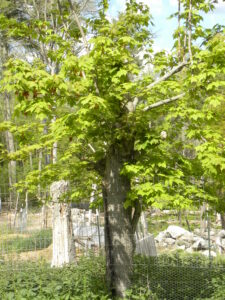
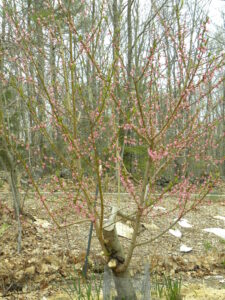
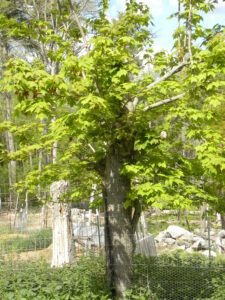
A Pollarded Maple

If you can picture a world before chainsaws, skidders, trucks, and portable sawmills for cheap dimensional lumber, it becomes clear that smaller diameter wood is safer and easier to process with basic hand tools. Even with modern options, this reality is still true. Most common species of temperate trees – except evergreens – sprout back well if a clearing large enough to provide abundant sunlight is made and the stump is protected from excessive impact by herbivores. Coppicing involves cutting to the ground every 3-20 years, producing fairly straight rods and poles. Pollarding maintains a tree small enough for easy management yet keeps most of the foliage out of reach of herbivores, by cutting the central leader at 6-10 ft. Laid hedges are tightly planted rows of vigorous shrubs (such as willow, hazel or hawthorn) cut partway through and laid down to encourage low growth, with horizontal pieces woven between vertical stakes to form a tight living fence. Dead brush can similarly be woven between stakes to form a dead hedge fence where light is less abundant.
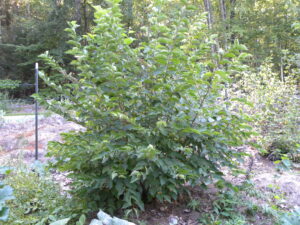
Hazelnuts are a great hedge shrub

In this way abundant animal fodder, posts, poles, rods, stakes, fencing, basket-making twigs and various other useful supplies can be produced quickly on a few sunny acres. At the very least, keeping a few trees alive and forever young moderates temperature extremes and builds soil fertility from the leaves they drop. Consider these factors if you seek to build greater sustainability and self-reliance on your homestead, in your community and throughout our troubled world.

For more information on this topic consider attending my upcoming online class and in-person tour through Seacoast Permaculture.
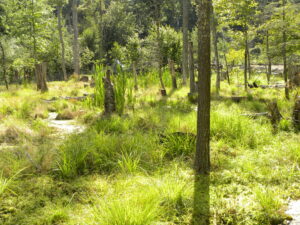
One version of a silvopasture system
Leave a Comment

Filed under Interdependence, Permaculture principles, trees, Uncategorized

Joyful Pruning!

“Nature is not a place to visit, it is home.” — Gary Snyder

To plant a tree is to be connected to a place with depth and longevity. When we were finally settled somewhere, “owners” of a place, it was a thrill to plant trees and bushes and other long lived perennials – anything beyond annual crops. We started with asparagus, rhubarb, berry bushes and trees. Fruit trees especially, plus a few for pollinators and medicine: peaches, pears, mulberries, linden, and unusual permaculture choices like persimmons and pawpaws.

This signified a level of stability and rootedness that I had been working towards for years. During all of that preparation I had studied how to plant and care for trees and other perennials. Now that it was time, though, having to do all of that and do it well was intimidating. I needed to sift through all the information I had garnered to figure out how best to keep them healthy and get a yield (permaculture principle 3).

Getting and preserving a yield

There are many pruning books, videos, and methods. Having read “The One-Straw Revolution” by Masanobu Fukuoka I knew that one could choose to be very hands off. Then again, permaculture orchardist Stefan Sobkowiak has an amazing organic orchard that he prunes and shapes intensively. There are also many variations in between. What should I do?

Feeling unsure of myself, and fearing hurting the trees, I started with minimal pruning. I saw the problems with that quickly with our peaches. We’d been warned that peaches could be difficult to grow in New England, especially organically. While I can confirm that it’s not easy to grow a perfect looking peach, our experience is that they grow fast, flower like crazy and make tons of delicious fruit! We still get hit by polar vortexes or super late frosts and lose a year like everyone else, but usually they thrive.

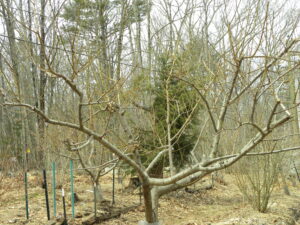
See the two big cuts we had to make after this overgrown peach broke?

The first peach we planted and barely managed ended up leaning sunwards, overloaded with fruit on long, high branches. Unsurprisingly, a main branch cracked and broke after just a few years. Luckily, it was above the graft so it has come back, but we lost a couple of harvests and I doubt it will live as long as it could have. So, I started pruning harder.

I also began to feel more confident in what I was doing and not second guess every single cut I made. I was able to visualize how the tree would respond to my cuts and what it would look like later on. The constant worry that I was doing it wrong faded. I could even enjoy spending time with the trees in the late winter cold, looking forward to their spring growth and summer fruit.

Pruning the Red Haven Peach in Winter

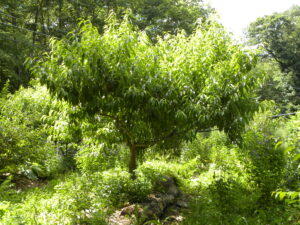
The Red Haven in Summer


I found a new level of satisfaction in the process when I read “Sprout Lands: Tending the Endless Gift of Trees” by William Bryant Logan a few years ago. In it, the author describes how most people lived in close, reciprocal relationship to the forests around them. They depended on and used their products for survival, intensively managing them with coppice and pollard techniques. Not only did these pruning techniques not

Pollarded Maple

kill the trees, but they made for longer lived individual trees, and healthier, more diverse woodlands. In Sproutlands he visits England, Spain, Japan, California and other places, finding the same story everywhere.


“I think having land and not ruining it is the most beautiful art that anybody could ever want.” -Andy Warhol

This is a narrative we recognize in permaculture. Rather than seeing humans and nature as two clashing entities, we recognize that humans are a part of the biosphere that evolved to have good, useful relationships with our fellow beings. That is how every species survives and thrives. So, I shouldn’t be surprised to once again have that reality shown to me, but given our species recent tendency to destroy things we depend on I find it hard sometimes to discern appropriate from destructive behavior.

When I first found permaculture this is part of what spoke to me. I was coming from both a farming and an activist perspective. As a farmer I appreciated permaculture’s practical improvements towards a sustainable, healthy food growing system. As an environmental and peace activist it was refreshing to find a way of looking at the world that did not assume that humans could only be problematic.

“The one who plants trees knowing that he or she will never sit in their shade, has at least started to understand the meaning of life.” – Rabindranath Tagore

This story of connection continues to this day. A 2022 study found that “the world’s healthiest, most biodiverse, and most resilient forests are located on protected Indigenous lands.” Even the World Bank with it’s poor track record of protecting land or people, recognizes that “Indigenous communities safeguard 80% of the world’s remaining biodiversity and forests on their land are better maintained, with a higher preserved biodiversity than those on non-Indigenous lands.”

Now that I have gained skills and practice, and a larger understanding of what is possible, interacting and working with the plants brings me great joy. So does the abundant harvest that the trees and our work with them bestow upon us. It is my wish that all people have access to this level of interdependent security and resilience.

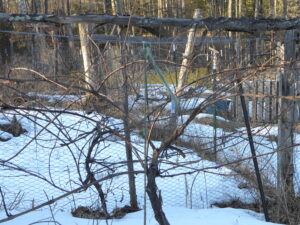
Unpruned Grapevines

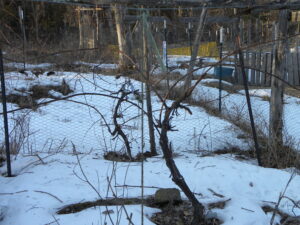
Pruned Grapevines

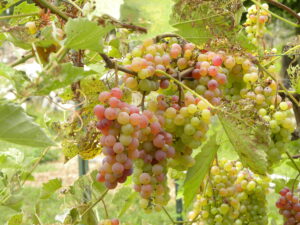
Grapes to Harvest

Leave a Comment

Filed under Gardens, Interdependence, Permaculture principles, trees, Uncategorized, Weather

Culture

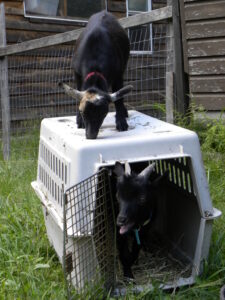
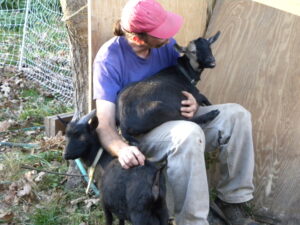
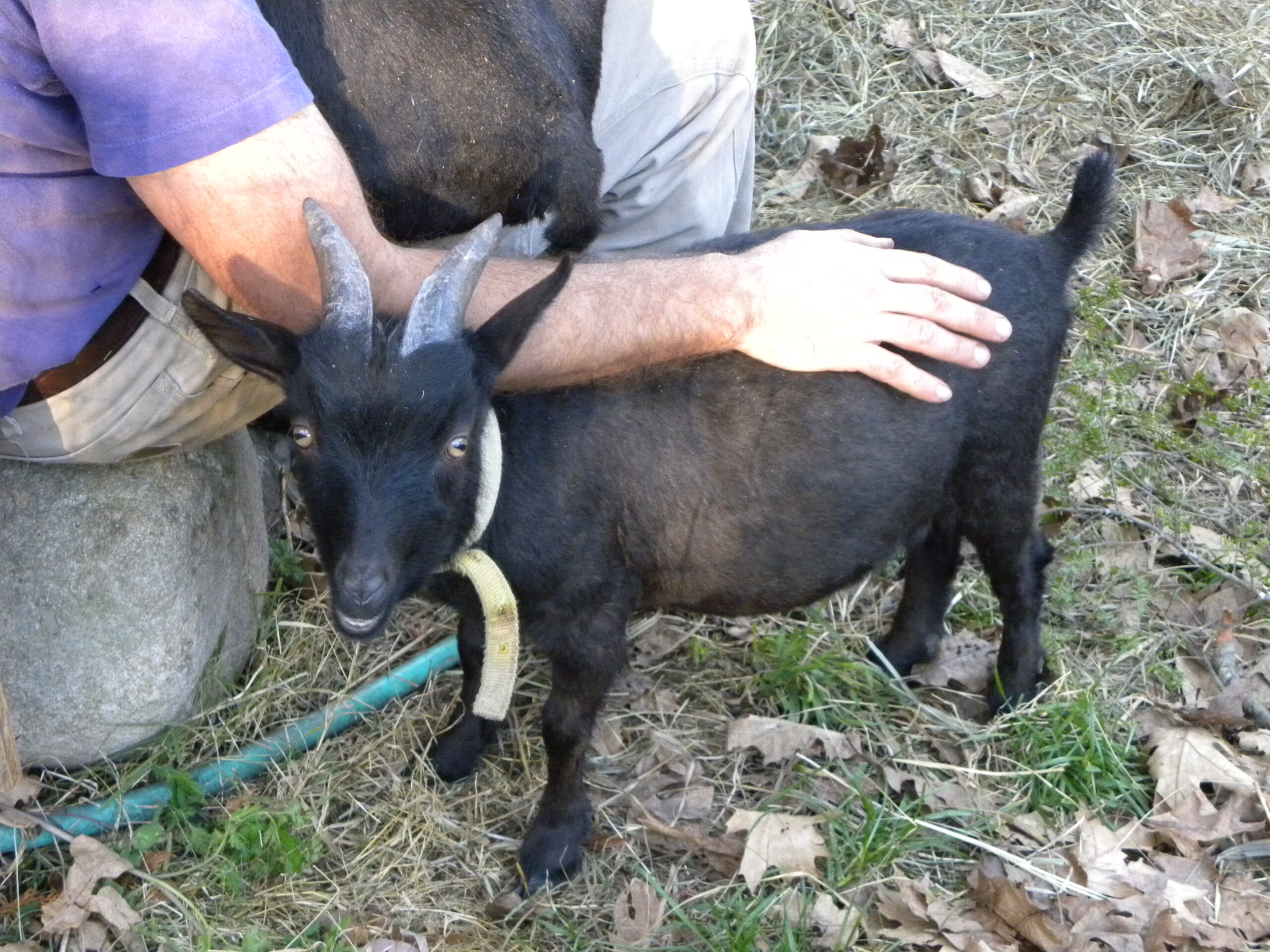
Zac & Ike

In August we brought two new boy goats onto our homestead. We do this every few years in order to avoid inbreeding in our herd. Over the winter we researched goat farms with different genetics from our animals who shared similar values and practices. We wanted them to allow the kids to be raised by their mothers, to keep the goats horned, to minimize medications and to breed for a good milk supply. When the kids were born in the spring, we checked them out online and reserved two: a buckling from their best milker for breeding and his polled brother, who would be wethered (neutered), to keep him company.

We manage our herd to maximize environmental sustainability and the well-being of the animals. To me, their well-being includes paying attention to their social needs. I know that some people think I’m silly, maybe even “not a real farmer” because of this. However, so many of the problems people tell me about their goat-keeping attempts trace back to their not understanding those particular needs. One of the most basic of those is that as herd animals, goats should not be alone. This is why I don’t sell goats singly, and why we brought home two when we really just needed the one buck.

The farm we were buying them from is two hours away from us. It was a fine trip there, listening to Sproutlands by William Bryant Logan. On the way back, though, each in their own dog crate separate from each other and taken away from their home, the little guys had many loud, scared complaints that I tried not to let completely break my heart.

Our New Boy Goats Arrive!

When the boys got here, they needed to be separated – quarantined – from the other goats. Although the farm they came from is reputable and does the appropriate disease testing, sometimes issues are missed and we take biosecurity seriously, prevention being worth so much more than cure. The newcomers are supposed to be adding value to the herd not infecting them with diseases or parasites. Also, giving them time to get to know the other goats from afar makes for a more

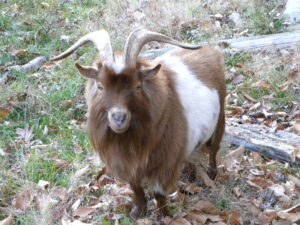
Marley, Our Resident Buck

peaceful eventual integration. These two would be going to live with our other two boys, who were years older and at least double their size.

So, we fenced off an area and set up a shelter with food and water and bedding. I was proud of the little home we put together. However, they had other priorities. From the moment they got here their focus was on our resident goats. The boys called and called to them, stood looking at them, and slept in the corner of the yard that was closest to them despite how unsheltered it was and its lack of food, water and bedding.  Listen to them here: 


I wasn’t terribly surprised by this behavior, figuring they are herd animals and thus want to be with the rest of the herd.

Right around this time, I happened to watch a talk from Biodiversity for a Livable Climate entitled “How Animals Shape Ecosystems” featuring Carl Safina talking about animal cultures. He mentioned programs that raise endangered animals then release them into the wild and how much more successful they are if there are still some wild animals of the same kind there for the newcomers to learn from. The way he defined “culture” amazed me. Here’s a quote from his Living On Earth interview: “Culture is the behaviors, the habits, and even the attractions that we learn socially and that are transmitted socially. The amazing thing to me is that, whether it’s human, modern, Western technological culture, or whether it’s sperm whales, culture basically does the same things for social beings. It answers the question of, how do we live here, where we live?”

My shortened version is: Culture is how we learn to live successfully in our specific place on the planet.

Suddenly, my view of what the little boy goats were doing

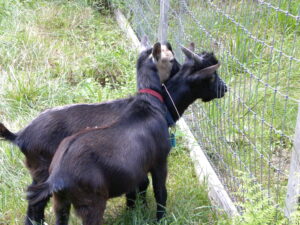
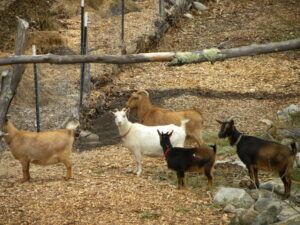
The herd likes to be together

took on a deeper meaning. They weren’t just looking for safety in numbers, they wanted to join the existing group to learn from them how to successfully live in this place that was new to them.

It also shifted my view on current human cultures. Previously I thought of culture as a collection of stuff (music, dance, dress, etc) that people in a place ended up doing that became important to their group identity. I appreciated and found the diversity fascinating, but saw it as somewhat ephemeral and random. Now, I see that those acts and items are an expression of what culture really is – an understanding of what to do, what to eat, what to wear, how to work together and connect that helps a group fit sustainably into a particular place (Darwin’s survival of those who best fit into their environment comes back to us here). I see also that the way so many of us have been forced out of our traditional places has us confused.  Our carefully created ways of living don’t necessarily apply to our new environment, but the work of developing new strategies takes time – and sometimes fails, especially if we cannot connect with those who have belonged to that place before us.

Maybe this is part of the reason why so many cultures right now are dysfunctional enough to not live up to the title of “culture” as they seem to teach people ways of being that actually destroy our ability to survive. It also sheds more light on why Indigenous people comprise less than 5% of the world population but protect 80% of the Earth’s biodiversity. Respecting and protecting their rights, saying no to market schemes that push them off their lands, and humbly turning to them as our teachers and leaders could be a key to our surviving and thriving – our goats could tell us that!

Socializing the New Guys

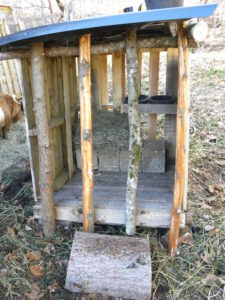
In the case of our new guys, we had good reason to keep them by themselves for awhile, and we were here to help them survive during the quarantine period. We took our cue from them about what they most needed and created a plywood lean-to in the spot they picked up against the barn. After two months with no health concerns coming up, we shifted fences so they could have some nose-to-nose contact with the boys they would eventually live with. The little buckling had a romantic day with Diana which seems to have resulted in a pregnancy. To be extra safe, Steve built a secondary shelter in the older boy’s yard with entrances too small for the adults to fit through. When we actually did bring them

Shelter Only Accessible By Smaller Goats

together, there was a lot of sniffing, a little pushing and shoving… and then a lot of welcome quiet for me! After months of those little boys calling and crying and worrying me that something was terribly wrong with them, it seems they really did just want to be with more of their own kind. Phew!

As a bonus, I have another book to add to my winter reading list: Becoming Wild: How Animal Cultures Raise Families, Create Beauty, and Achieve Peace. The promise of more rest and great learning makes the cold and dark less daunting as we enter December.

2 Comments

Filed under Goats, Interdependence, Uncategorized