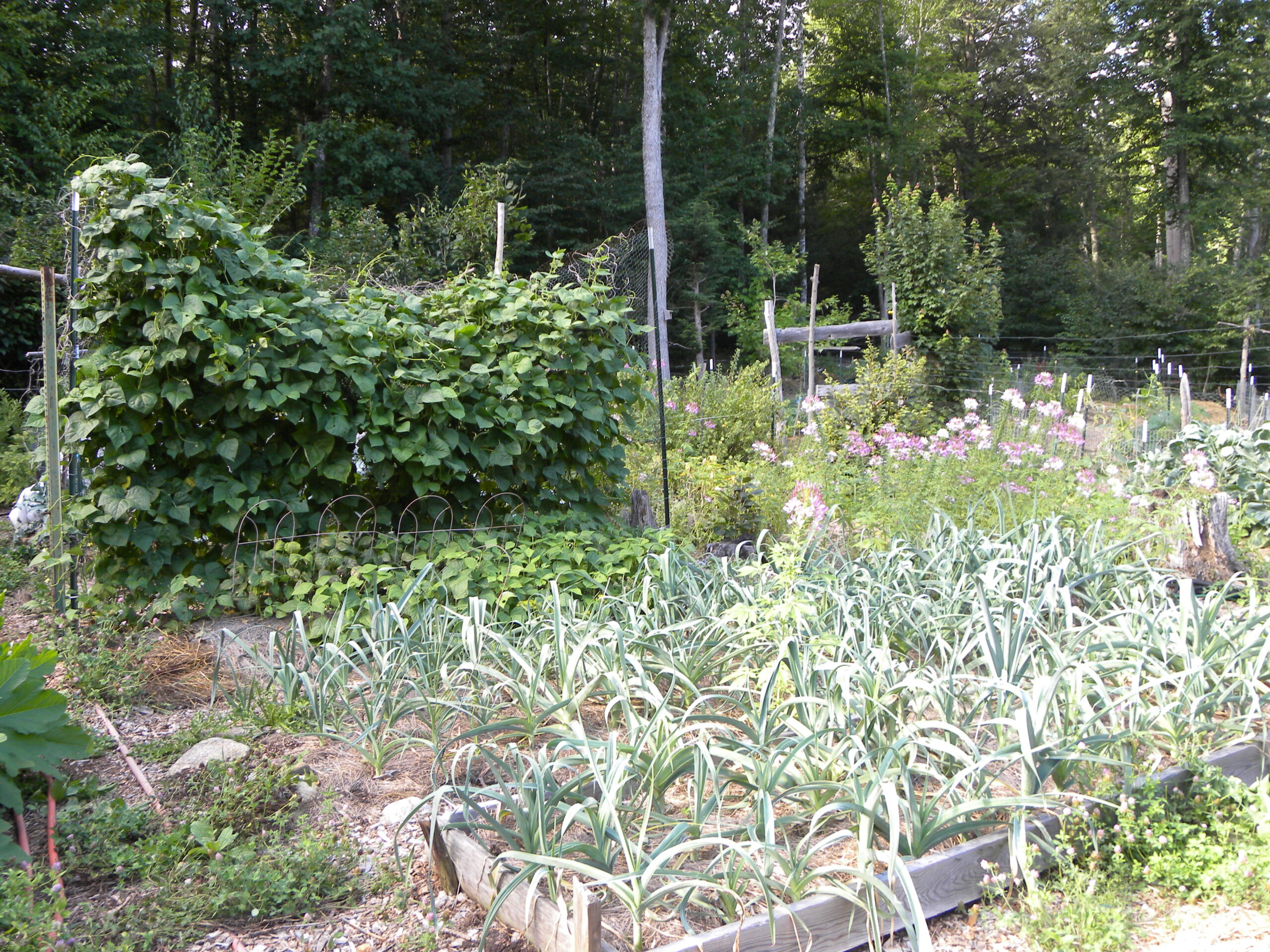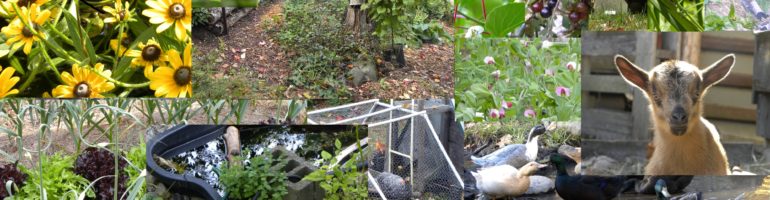
The world is full of systems that create the conditions for life – including humans – to thrive. Permaculture Principle 5: Use and Value Renewable Resources and Services asks us to notice, respect and work with those instead of turning to scarce resources and destructive technologies.
In my last post, I discussed Principle 2: Catch and Store Energy. These two principles are closely related, both asking us to notice and choose to use energy flows that easily regenerate, to skim the excess versus deplete stores that cannot be refilled quickly.
Coming up now are few examples which I appreciate and know I depend on: pollination, pest control, rain, soil and human beings.
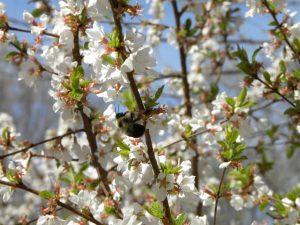
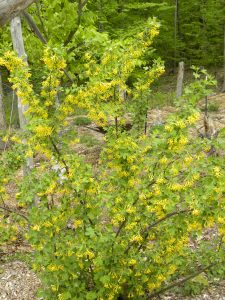
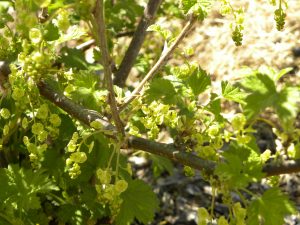
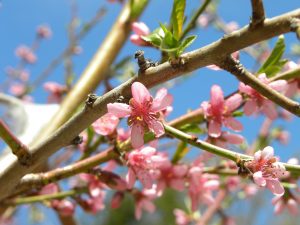
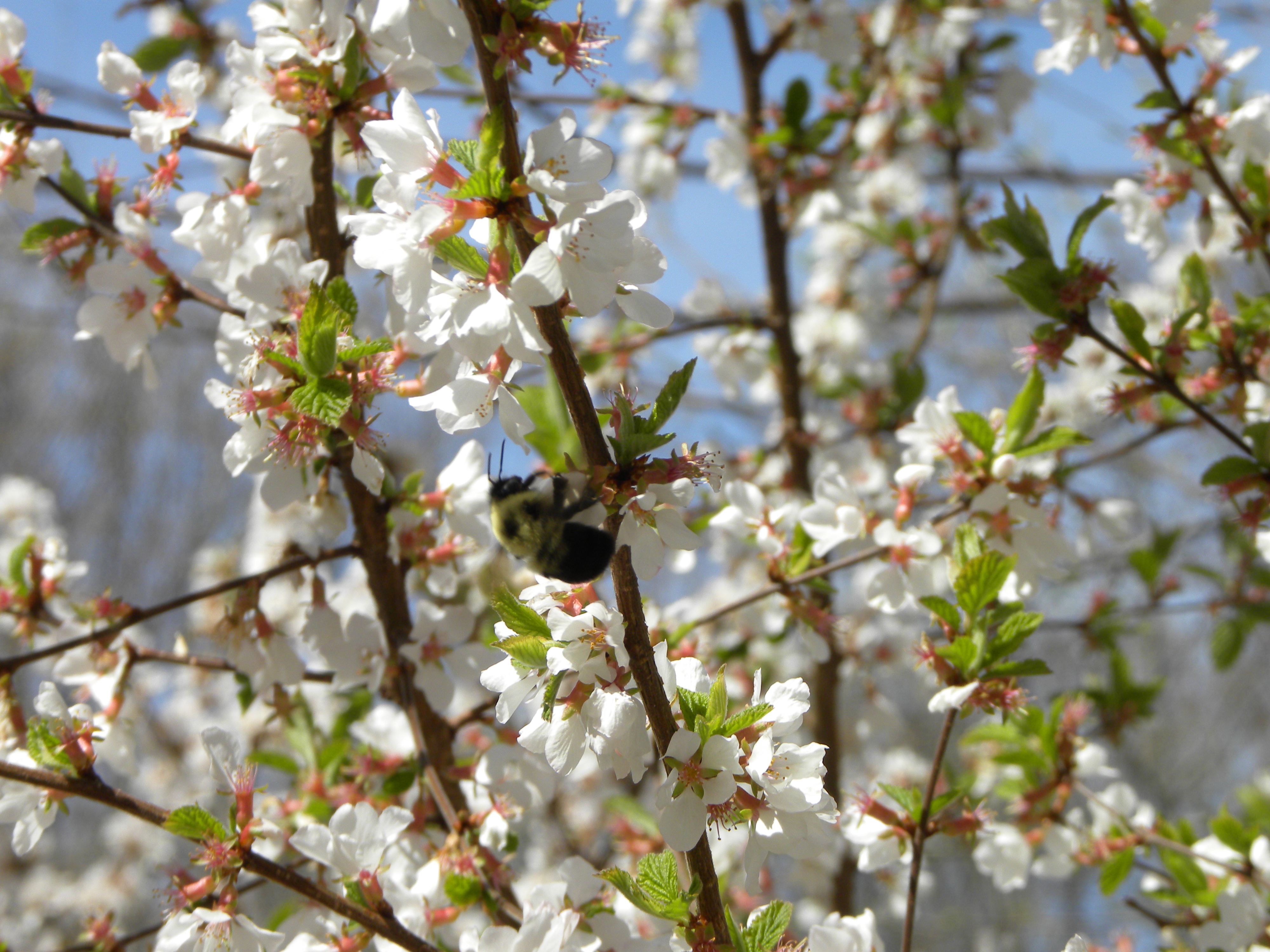
Pollination has caught people’s attention over the past couple of decades, unfortunately because of the collapse of honey bee populations and the decline of similar species. I’m happy to say we have an abundance of insects here. With the diverse ecosystem we’ve encouraged and by not using any harmful chemicals we have created an oasis for them. We see bumblebees, butterflies, moths, flies, wasps, beetles, hummingbirds and bats. Having held the job since before humans were  around, they are much better at it than we are. One day of hand pollinating fruit trees would convince you to revere these amazing little workers.
Other critters (or sometimes the same ones) offer pest control services.

Frogs also control problematic visitors, like slugs
We have learned that often when an insect comes to chew on our plants (a “pest” to us), it isn’t long before another creature shows up to eat them. While my focus is on food plants, I make space for flowers as well since a succession of blooms keeps helpful friends living here with us. The bare “clean”

Slug Control Experts
fields and monocrops of the industrial agriculture system has to turn to chemicals because they’ve driven out their potential partners in food growing.
Then there is soil. A healthy, biologically active soil recycles nutrients while feeding and tending to plants, and actually creates more soil in the process. I was told long ago by a fellow farmer that we are not plant growers, we are soil microbe ranchers. That outlook has served me and my gardens well. Also, by understanding how soil functions we can work with or mimic it in helpful ways. Composting and rotational grazing for instance. The permaculture techniques of sheet mulching and hugelkultur copy how soil is built in forest and grassland systems, but with our intervention happens much more quickly. It can take a forest 1,000 years to make an inch of soil, a functioning grassland system around 100 years, and a permaculture garden can make inches in a single year.

Good Soil Grows Great Food
When I see and tap into these renewable resources and services, my garden is abundant, my animals are healthy, carbon is kept out of the atmosphere and water is stored here, all without chemical fertilizers. Plus I do not send valuable resources off to the landfill.
This year’s record-breaking drought once again pointed out the importance of the water cycle to our lives. After previous dry years we invested in serious rain catchment infrastructure. We created one big and multiple small ponds, and set up large totes for catching and storing water off of our buildings. However, there is no irrigation system we can install that rivals rain falling over the land.
Currently when people talk about renewables they are usually referring to human made technology like solar panels, wind turbines, and electric vehicles. But underlying all of those are the ecological systems that operate on this planet. Sun and wind are abundant and not in danger of running out, but turning that energy into electricity takes technology and scarce resources. For instance, solar panels like we have on our house are made of plastic (oil), plus metals and rare earth minerals that need to be mined. Using sunlight to directly heat, dry, and see by is even better.
As Wendell Berry pointed out in a talk years ago, humans are also solar-powered! All animals are, through our relationship to plants. Plants can take the credit for capturing sunlight, then we eat the plants and/or we eat other animals that eat the 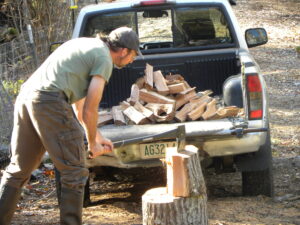 plants. Every time we take work out of human hands and mechanize it, we have moved away from clean, renewable energy.
There are so many other examples, many of which we do know but just don’t notice. Can you think of more? Listen to Charlie Mgee’s song for other ideas. Try tuning in and looking around. Maybe you will see, and hopefully feel grateful for, all the processes that freely support us.
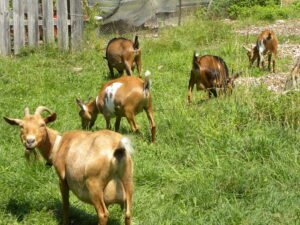
Goats Mow Grass, Fertilizing as They Go